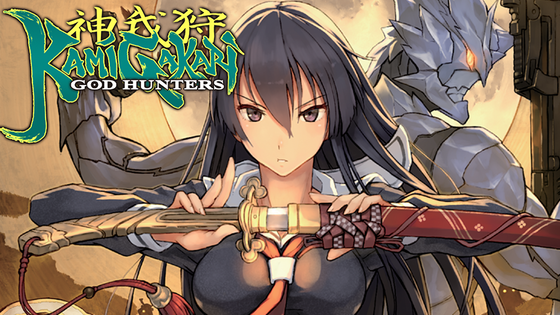
A tabletop RPG from Japan about secret societies, soul-eating monsters, gods of destruction, and the anime heroes that fight them!
Latest Updates from Our Project:
Stretch Goal #2 Achieved: Localization Team Pay Raise!
almost 8 years ago
– Fri, Nov 02, 2018 at 01:21:07 AM
Hot diggity dog!
Amy here. We've reached $27,000, which means, oh boy, everyone on the team gets a pay raise!
I was sure this stretch goal would just upset everyone. I hesitated to add this stretch goal, because I felt like it would come off as greedy. It would be understandable if someone felt this way, but I can't stress how prevalent underpayment is in the RPG industry. It's not out of malice or disregard for your team, it's just a function of making something with an extremely thin profit margin and low budget, you cut corners wherever you can. But that doesn't make it right! I'm glad I was able to get out of that trap, and I'm sure everyone else is happy about getting more money.
This Kickstarter has already been more successful than I could have possibly imagined, and we're not even halfway through yet! Thank you, all of you, from the bottom of my heart.
The next stretch goal is a doozy, but I'm sure we'll achieve it! At $35,000, we'll be able to immediately begin work on Expansion One: Requiem for the God Soul! This book contains new setting information, new Ancestries, new Styles, new GM tools, and so much more! That said, I need to give the usual disclaimer: Despite the lowest goals insisting that digital stretch goal content will be included with your pledge, the expansions will not be part of it.
This is outlined in the FAQ, but let me go into this in an update where everyone will see it. I'm extremely sorry I had to break the promise like that. When I added those backer tiers, I wasn't expecting such overwhelming support that I would be able to fund full-fledged expansion books as stretch goals. I was thinking like, translated excerpts from Role & Roll magazine, a Japanese RPG magazine that has Kamgiakari content almost every other month, or something like that, but clearly I underestimated all of you, because here we are.
I tried to keep that promise, but going by the terms of Serpent Sea Games' agreement with Arclight Games, and their expectation of royalties on every copy sold, giving away the book to hundreds of people would be a clear violation, or at least fray our working relationship. I'm sorry, but that's the situation we're in.
Please look forward to tomorrow, when Noelle will be back, talking about how she discovered Kamigakari, and came to become involved in all of this!
The Soul Burns
almost 8 years ago
– Thu, Nov 01, 2018 at 01:31:50 AM
Yo! Noelle here. Happy Halloween everyone. It's my favorite time of the year (well, fall in general is really), so I thought I'd write up a nice post on something spooky. You know you have HP in this game (or you do now). You know how "MP"/paying for your abilities is handled (see update #5 if you don't). But many games these days have an action point system which allow you to spend a resource in order to obtain special benefits. Does Kamigakari: God Hunters have one? It sure does! How is it spooky? I'll tell you, but as a little spoiler: you can overspend it.
As always, terms may change.
Soul Crests
A blazing Soul Crest
Narratively in the game, when you get a Shard, a "Soul Crest" appears somewhere on your body. A Soul Crest looks like symbol made up of 22 symmetrical iridescent lines. The exact shape of the symbol is determined by the nature of your Shard--for example a Dragon Host's symbol will look like a shield, helmet, or gauntlet, while an Archslayer's may look like a sword or other weapon. Note that when you create your character, you can either determine for yourself the shape/placement of your Soul Crest, or use a few charts which, through a roll, will randomly determine them.
Every Soul Crest is unique--no two are alike. And all creatures with a Shard possess one, including Mononoke and Aramitama. Furthermore, there is no actual way to hide a Soul Crest short of simply never using numen. When you channel your abilities, your Soul Crest blazes to life with every color of the rainbow and shines through anything that might be covering it. If you have a Crest in the shape of wings on your back, or a Crest burning like flames over your eyes, then while normally they'll be invisible, the moment you go super, they show through clothes or shades. And yes, I phrased that very deliberately to be as silly anime as possible.
This means that with enough study, you can identify any entity by the shape of their Soul Crest. This plays into combat, but we'll come back to that in another post. Because what you want to know is how to...
Burn Your Soul
All Awakened share the ability to create pocket dimensions through the use of spatial barriers. However, the three types of Awakened--Aramitama, Mononoke, and God Hunters--each have their own unique innate powers as well. Aramitama can form Soul Pacts with other creatures, feeding on souls in order to grant wishes. Mononoke can transform the interior of the pocket dimensions they create to form special lairs called Sanctums. And God Hunters can Soul Burn.
Soul Burn has three different effects: Physical Transcendence, Vital Ignition, and Concept Destruction. At the start of an episode (see update #8 for more info on that), every PC has access to the first of these, and unlocks the other two by gaining Bonds. I'll explain Bonds below, so for now let's just look at what each one does.
First though, remember how I said a Soul Crest is explicitly made up of 22 lines? Well, each use of one of Soul Burn costs you a number of Crest points. If you immediately thought that you start off with 22 Crest points to burn, good job. Soul Burn is literally sublimating portions of your soul into power, and this is represented by lines on your rainbow-shining Soul Crest going dark. Starting to see where this might turn spooky...?
Now, the Physical Transcendence option of Soul Burn allows a God Hunter to add up to 3d6 to any roll. So if you're attacking someone and you really need to make sure you hit? You can add up to three more dice to the roll. Doing this option burns as much Crest as dice you add to the roll. So for example if you normally would roll 2d6 for a check, and decide to add 1d6 to it through this effect for a total of 3d6, then you'll burn 1d6 of Crest (rolled separately).
Vital Ignition meanwhile is how you stay in the fight. If you get Downed in combat by being reduced to 0 HP, you normally are out of the fight unless one of your allies happens to have a revitalization Talent. Vital Ignition however allows you to stand back up, and heal a small amount of HP on top of it. It can only be used once per fight however, so be careful! Using it burns off 2d6 worth of Crest.
And finally, Concept Destruction. This is a straight offensive use of Soul Burn, where you charge your attack with so much power you literally cleave away at the very concept of another being's existence (peak anime, I love it). You use this option after you know whether you've hit or not, and if you choose to use it, you roll 1d6. The result is added to your Rank, which directly impacts how much damage you deal (see update #5). After using it, you burn 2d6 worth of Crest. Time it for just after rolling a critical hit to inflict some truly absurd damage!
Costs are paid at the end of your turn, and are added up together. So for example if you begin your turn by Vital Igniting, adding 3d6 to your attack check, then doing Concept Destruction, you only roll the 7d6 for the collective cost of your Soul Burn actions at the end of your turn. You cannot influence this roll, either.
You can spend as much Crest as you like. Even if you go into negative numbers, you can continue to spend Crest. But of course, that has consequences...
Bonds
Before that though, we need to talk a bit about Bonds. Bonds are essentially a character's connections, the things that give them a grounding in this world. Their friendships, their hopes, their love, and even their hatred. Bonds can be named for other characters, either PCs or NPCs, or can be objects, places, or groups. A PC begins with two Bonds already established--one to something the GM gives them in their Handout (update #8), and one to another PC. Bonds are made up of the name of the Connection, and usually an emotion that describes how the PC feels for that Bond (which can be positive or negative, or even nothing at all).
From there on, a PC can only establish one Bond per scene they appear in. The player themselves decides who to form a Bond with, and what the emotional connection is, if any. A PC can have up to a maximum of 7 Bonds. As mentioned, options for Soul Burn are unlocked the more Bonds a PC has. Having even one Bond is enough to use Physical Transcendence. A minimum of 4 is needed to use Vital Ignition, and one must have all 7 Bonds filled in to use Concept Destruction.
Bonds are reset at the end of an episode, when they are used by the God Hunter to try and stabilize their soul after harsh conflicts.
Recovering Soul
At the end of any combat scene, PCs regain Crest equal to every defeated Mononoke's level divided by 5 (and in Kamigakari: God Hunters, you always round up). So for example, if you defeat four level 1 Mononoke and one level 6 Mononoke, each PC in that fight regains 6 Crest (1 / 5 rounded up is 1, 6 / 5 rounded up is 2. Since there were four level 1s, (1x4)+2 = 6! Yay math!) This Crest recovery even happens at the end of the final battle with the Boss enemy. In addition, certain Distortions may heal Crest in the process of dealing with them.
If, at the end of the episode, a PC still has a negative value of Crest, then that's where their Bonds come in. A PC can roll a number of d6's equal to half their total Bonds (rounded up, to a maximum of 4d6), and recover Crest equal to that amount. If it's still not enough, defeated Aramitama leave behind a Kushimitama, which can be used to double the effect of this roll. But if even that isn't enough...
Embers of a Soul
A negative soul value means that the God Hunter has abused their soul to its limits, and they must pay the price. Their fate is decided by a single six-sided die. Not everything is bad, of course. Should the player of this tattered PC roll a 6, they shake off the effects of burning their soul away and make a full recovery. But it only gets worse from there. On a 5, the PC loses all of their memories. On a 4, they narrowly avoid death, but their Soul Crest burns away and they become a normal human again. On a 3 or a 2, they succumb, dying...
And on a 1, they become an Aramitama under the control of the GM.
Told you it'd be spooky!
Conclusion
This is legitimately one of my favorite systems in the entire game. I notoriously love high risk/high reward systems, and I'm often making silly heroic sacrifices in stories. Losing Crest is done entirely voluntary (well, with some very few exceptions; Bosses have ways, you see) so there's little risk if you feel protective of your character. After all, even a bad roll on Physical Transcendence will 'only' burn away 18 Crest, leaving you safely with 4. And you can absolutely count on surviving at least being -4 Crest, seeing as you roll 4d6 for your Bonds, with a more average roll letting you get all the way down to -14 or so!
Likewise, the connection to how Soul Crest physically appear and how they would look while you put your very soul on the line is just a really cool visual. And then to think you can even survive the process...! Or maybe turn into an Aramitama to haunt your friends. Super cool, super spooky.
Hopefully next time I'll finally get around to combat, but I also hope you had fun reading this. Meanwhile, remember to check in on update #4 and submit any questions you might have for our interview with Rikizo, the author and original creator of Kamigakari!
Structuring God Slaying
almost 8 years ago
– Tue, Oct 30, 2018 at 01:49:06 AM
Hey everyone, Noelle here! How was your weekend? Today I was going to talk about combat, but a question arose about how "scenes" work in the game. This made me realize that combat is just a kind of scene, so it makes sense to pull back and discuss first how Kamigakari: God Hunters arranges itself in terms of narrative structure, and how combat might play into that. Once again, I'll remind you that any terms I might use are subject to change. The mechanics will be as I describe them, but the language around them may look a little different when the book gets to you.
Before we start though, I want to give a bit of a warning. Whenever I talk about how Japanese TRPGs are structured, I often enough get people staring at me like I just grew tentacles. The tabletop roleplaying hobby in Japan is more niche than it is here in the West. While you may be accustomed to seeing the ubiquitous "What is an RPG?" header in a Western RPG book that's meant to help new players get accustomed to the idea of an RPG, in Japan, most RPGs assume every person who picks up the book is new to the hobby. Moreover, the realities of gaming in Japan, such as time and even physical space available to play, are quite different than here in the West. As such, the way Japanese games are structued tend to focus on a singular goal: get in, roll dice, get out, all as cleanly as possible.
Read this post not as hard and fast rules, but rather as guidelines made with the above in mind. For new players and GMs, these guidelines may be (and are) in fact quite helpful! For veterans used to Western games, take them as a suggestion for a new way to play, or as tools that can be used or put aside.
The Concept of a Scene
All right, first off, "scenes" in Kamigakari aren't really all that new of a concept. It's a formatting device for your roleplay, where you act out what your characters would do, according to the situation the GM gives you. This is basically just like a movie or book, except done live at the table. You define the start of the scene as "when something interesting for the story starts to happen." You end a scene when that interesting thing has already happened and there's no more to do or to say on that particular subject.
You don't need to roleplay walking to school, or chit-chatting with the barista getting your morning coffee, or apologizing when you accidentally run into someone. However, you might do all of those things if you're being stalked on your way to school, or a villain mind controls the barista to deliver a warning, or the person you accidentally run into is someone you know should be dead, but is now alive and missing her memories. Essentially, you cut out the cruft, and focus only on the drama. That's how scene formatting works.
Episodic Structure
A "scene" is just the building block for a larger story, however. In Kamigakari: God Hunters, the story is primarily structured around the idea of an "episode." This too is just like you'd see in a TV show. An episode spans four distinct phases: introductions, the middle, the final battle, and the ending. Each phase is made up of a number of scenes that provide exposition, rising action, the climax, and then the denouement. (Just look at how evenly that maps!) For the introduction, each scene focuses on one of the PCs and explains how they get involved in the story, while also setting up that story. The middle then mixes the PCs together, and drives them towards figuring out what's going on. The final battle is usually after the PCs have it figured out and now are solving the problem (with a cool boss fight). The ending then is like the introductions, having a small scene focusing on each PC individually, where they reflect on the story, and perhaps new questions are raised.
Typically, an episode will look like this. The introduction draws the PCs into a supernatural incident, such as people going missing, or rumors of a demon stalking the streets at night. The middle then has the PCs uncovering what's causing the incident, and discovering the location of a "distortion"--a magical ritual that allows someone to collect the souls of innocent people to feed to an Aramitama, usually in exchange for having their wish granted. (They then, of course, deal with the distortion, but distortions are their own thing and may need a separate post!) The final battle then has the PCs battle the Aramitama who brought this sad tale to life, and put it down. The ending has the PCs reflect on what the case meant, and perhaps makes them wonder how the whole thing started--is there more to the story?
Mechanics of an Episode: Handouts
To help play out this story, Kamigakari: God Hunters offers a number of tools that guide the PCs. The first of these is called the Handout. The GM prepares a number of handouts to give to the players, the amount of info on which varies depending on the kind of game being played. If you approach God Hunters as one shots where you meet monthly, it may be more satisfying to make fresh handouts every new game, particularly if you have a revolving GM. Should you meet weekly however, the handout may contain less information, as characters continually appear in certain plotlines. This also allows for players to perhaps switch PCs around as needed to help the story along.
A fully loaded handout will mention the PC's overall role in the story, for example 'SpecProv Agent'. If the GM and players want to use the pre-made characters that come with the book (highly useful in convention games, for example), then the handout will specify which character to use. It may also stipulate a condition the character has to have. For example, if you need a SpecProv agent in your story, in only makes sense to require that they be part of the SpecProv faction (you can also do things like require a character to be a high school student or whatever you need). Then, the handout will provide a "Connection"--usually a specific person, but sometimes a group or place--along with a general emotion your character should associate with that connection. For example, Noelle / Friendship, or God Hunters / Hope. Then, the handout gives a short blurb on the generalities of the role of that character in the story, and finally, a goal, which will be the PC's guideline for what to do if they're stuck and unsure how to proceed.
A lesser handout may only need the connection, the blurb, and the goal however. It's down to what the GM feels would best serve the story.
Mechanics of an Episode: Info and Truth
The GM also should prepare somewhere around 7-8 pieces of Info, and a Truth. Info essentially act as clues that the PCs gain during the story. When a PC investigates something in particular, they may receive one of these Info bits, signifying its importance within the story. (Nothing says 'the tracks are actually important' like being handed something that explicitly says that.) Additionally, it's entirely permissible to make it so that upon learning certain Info, certain benefits come with it. Perhaps a piece of Info is related to an enemy's weakness, which gives a PC who holds that Info a once-per-session ability to halve damage inflicted by that enemy. Maybe they learn about an ambush being planned, and so earn the ability to automatically succeed at an appearance check--whatever the GM wishes can happen, does happen. Info is meant to be used to promote the story's key points, and somewhat gameify the gathering of information.
The Truth meanwhile is like Info, but could be termed the only one that really matters. Info is the trail of candy that leads to the candy dish that is the Truth. Once the Truth is discovered, the PCs know where to find the distortion causing the problem, and from there, can shut down the Aramitama or other creature responsible for the tragedy occurring. Finding certain Info may be entirely necessary to discovering the Truth, but it's also possible that the Truth may come on its own, and gathering Info merely makes you more prepared to deal with it. These tools are meant to be used to drive the drama and keep players on their toes and invested in what's going on.
Scene Mechanics
Now that you know how to conduct the overall episode, it's time to return to the scene itself, which also has mechanics. Kamigakari, and may other Japanese RPGs, do not assume necessarily that all PCs are working together. While they may be united in cause, the various factions at play also aren't entirely friendly with one another. For example, a Knight-Templar God Hunter may work with another God Hunter from Arkham University to take down a dangerous Aramitama, but what about the Godforged Regalia it had been keeping in its possession? Even without direct confrontation, PCs may differ in how they go about things. A hot-blooded Dragon Host hero may frown at a stuffy Special Provisions Digital Sorcerer, and they may want to gather information in their own ways.
Each scene therefore has a designated Scene Player, who is the focus of the scene. The Scene Player, once designated by the GM, may then designate "Fellows"--supporting characters they'd like in the scene. The GM may then also add any other PCs (and of course, NPCs) to the scene that they feel necessary. Only then, after choices have been made, can PCs who were not chosen sort of "butt in" on the scene by designating themselves a hopeful, which can be done at any time before the scene ends (not necessarily at the start!). And this is where the Appearance Check comes in, a simple 2d6+Luck roll.
The Scene Player never makes an Appearance Check, they simply appear in the scene. Fellows meanwhile do make an Appearance Check, with a difficulty of 2 (meaning they appear even if they fumble). The GM's chosen appear automatically as well. That leaves hopefuls to make their check against a difficulty of 8. Once all Appearance Checks have been made, the scene starts. Once the scene ends, any PC that didn't appear in the scene is said to have been Backstage, which comes with a few benefits, like being able to recover HP (having rested instead of doing the scene), or buying new items. Once a new scene begins, a new Scene Player is designated, and the process begins anew.
Appearance Checks also serve another purpose. Out of combat, the ability to cycle numen is rare, as you make less checks in narrative time. However, you still retain the ability to influence (see update #5), so rolling for Appearance Checks gives players the ability to fine tune their numen pool for the next big encounter.
Conclusion
Annnnd I think that's it! Whew. I don't want this to get too long, but suffice it to say that there's a lot of different kinds of scenes that can crop up. Drama scenes, where the players solely interact with one another. Master scenes, where the GM alone narrates something the PCs wouldn't know offhand, but builds suspense for the players. Info gather scenes, run as a montage to gather more tidbits that could lead them to an Info, or even to the Truth itself. Distortion scenes, wherein the PCs correct a dark ritual's influence over the world. And of course, combat scenes--whether fighting against small fry minions, or against the big boss itself!
Hopefully this all sounds interesting to you. A big post today, and I had to rewrite it at least once to make sure I had everything included. What do you think? Are you excited? Hopefully next time I can get to combat in specific, and maybe even talk about distortions a bit more! Look for a new post later this week. ♥
Kamigakari English Logo Evolution
almost 8 years ago
– Fri, Oct 26, 2018 at 11:30:00 PM
Hi! Amy here. We hit our first stretch goal today! Now every digital version of Kamigakari: God Hunters will come with an ebook essay collection on the creation of the English version, Translator's Note: Numen Means Spirit!
This has nothing to do with that goal, but let's talk about typefaces and logo design! I'm sure this will be super interesting.
The Japanese cover for Kamigakari. It's pretty great, right? It's not just used in the English version because I'm too cheap to get new cover art; why mess with perfection? The logo, though, needed to be, you know, readable for people that don't speak Japanese, so let's examine how that came to be.
All of the following was the work of a contracted artist, Vincent Angerosa, who is great.
First attempt at an English logo. Besides obviously imitating the Japanese logo, it's based on an alternate English logo for a certain super-popular mecha anime where the main title was written in the super-stylized typeface occupied by the katakana on the Japanese logo.
As you may notice, the subtitle is completely wrong. Also, the katakana are backwards. So, it started pretty rough.
The subtitle's fixed and as a result doesn't look so squished, but the katakana in the background is still messed up and the drop shadows render them somewhat illegible.
This was just trying something radically different for funsies. Doesn't really work, does it? This is where we decided to tone down the crazy on the block letters in the background to make it more legible, but we went too far and it's basically just the Japanese equivalent of Impact. You'll also notice that starting here, the katakana is corrected but the kanji is backwards.
The original colors for the main logo with the overly-sensible Japanese. But we still didn't get the kanji fixed! Can't win for losing.
We also tried this because one of our editors really liked the red from #4. This one, however, failed an important design test, conducted very professionally by yelling at the artist's girlfriend, who was playing Witcher 3 on the other side of the room, to see if she could make out the subtitle from a distance. She could not. Back to the drawing board.
The semi-final logo design! This one mostly didn't work because it's not vectored and the kanji in the back is still way too bland.
Final logo! Transparent, vectored, the kanji is more in line with the rest of the logo's text, and we finally dropped the furigana. Some slight changes to the logo font to make it more distinct and give the whole thing some room to breathe.
And, that's how we got the English logo! It's pretty great, right? Please say it's great.
Funded! Also, stretch goals!
almost 8 years ago
– Fri, Oct 26, 2018 at 02:35:29 AM
Amy here. We're all truly at a loss for words. But, I drew the short straw, so I have to write this anyway.
All of us want to thank you from the bottom of our hearts. We kind of had an inkling this would catch on, but I don't think any of us expected to be entirely funded in a little over 48 hours! This has been an incredibly humbling experience and we can't wait to get started.
But, there's another month in this thing, so let's talk about stretch goals.
My original plan was to not even bother with these, because I didn't expect to be funded until late in the campaign, if at all. Seeing as how we've succeeded beyond our wildest dreams, we may as well do away with that idea and try and go a little further. And by a little, I of course mean "expansions."
Stretch Goals!
Like we said, at $20,000, we'll start work on Translator's Note: Numen Means Spirit, a collection of essays on the Japanese folklore, mythology, and culture that went into the writing of Kamigakari, as well as observations on Japanese RPGs and Kamigakari in particular. This will be a PDF-only release free to all backers.
At $27,000, the localization team will get their pay doubled. A dirty secret of the RPG industry is the vast majority of creatives are paid peanuts. This amount of money will allow much more reasonable compensation for everyone's hard work.
And if those are met?
Japanese cover art for Expansions 1 and 2
At $35,000, we'll be able to produce the first expansion book, Requiem for the God-Soul. This book offers an extra system for dungeon crawling through Sanctums, the deadly lairs of Mononoke, as well as three new Ancestries (Dragon Lord, Divine Spirit, Legendary Soul), three new Styles (the punchtastic God Hand, the minion-summoning or riding Contractor, and the power word kill-slinging Divine Speaker), plus brand new items, Mononoke, a new pre-written adventure, and more world information. This will be a PDF and PoD-only release, addable in a new tier or through a post-campaign Backerkit poll. The Avatar of Ruin tier will have this added automatically.
Should the impossible happen and we hit $45,000 we'll be able to produce the second expansion book, Machine God of Damocles. This book offers the unique Scene Template system, which allows the GM to automatically create new cases, or randomly produce all kinds of things for their own games, such as events, NPCs, and even what the boss enemy looks like and what they're after. It also offers plenty of new world information about how science and numen interacts, three new Ancestries (Cyborg, Demon-Eyed, and Traveler), loads of new gear, Mononoke, and more. This too will be a digital-only release that only Avatar of Ruin gets for free.
Now, with that in mind, we made another promise that's much more important to all of us. We dont' want to get delayed by project bloat. Even if we meet every one of those goals, we're going to produce them sequentially. We won't work on the essays until the core rulebook is done, we won't work on either expansion until the essays are done, and they'll be released as they're completed, rather than as a single release. This will allow us to keep cranking out content while still meeting our original release dates.
Once again, thank you all for your support! We can't wait to kill some gods with all of you.
We use essential cookies and our own first-party analytics to run BackerKit. With your consent, we also use cookies to measure our marketing and share data with advertising partners to show you relevant ads. Accept to allow all cookies, or reject to turn off the optional ones.
Read our cookie policy.